Does cardiac risk assessment need a 64-slice CT?
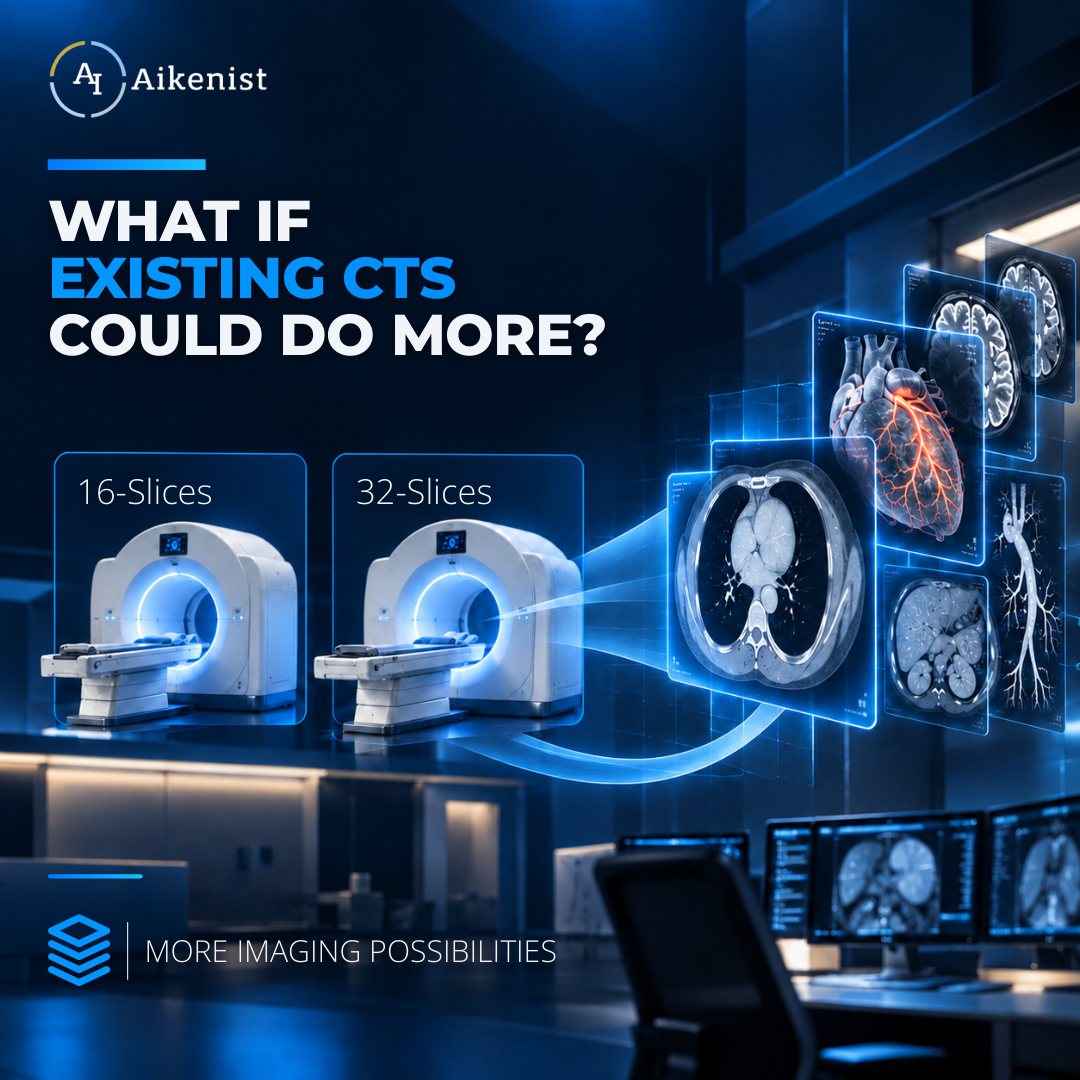
It is easy to think about imaging innovation in terms of newer machines and higher specifications. But there is another question worth asking: what more can we do with the CT infrastructure already available?
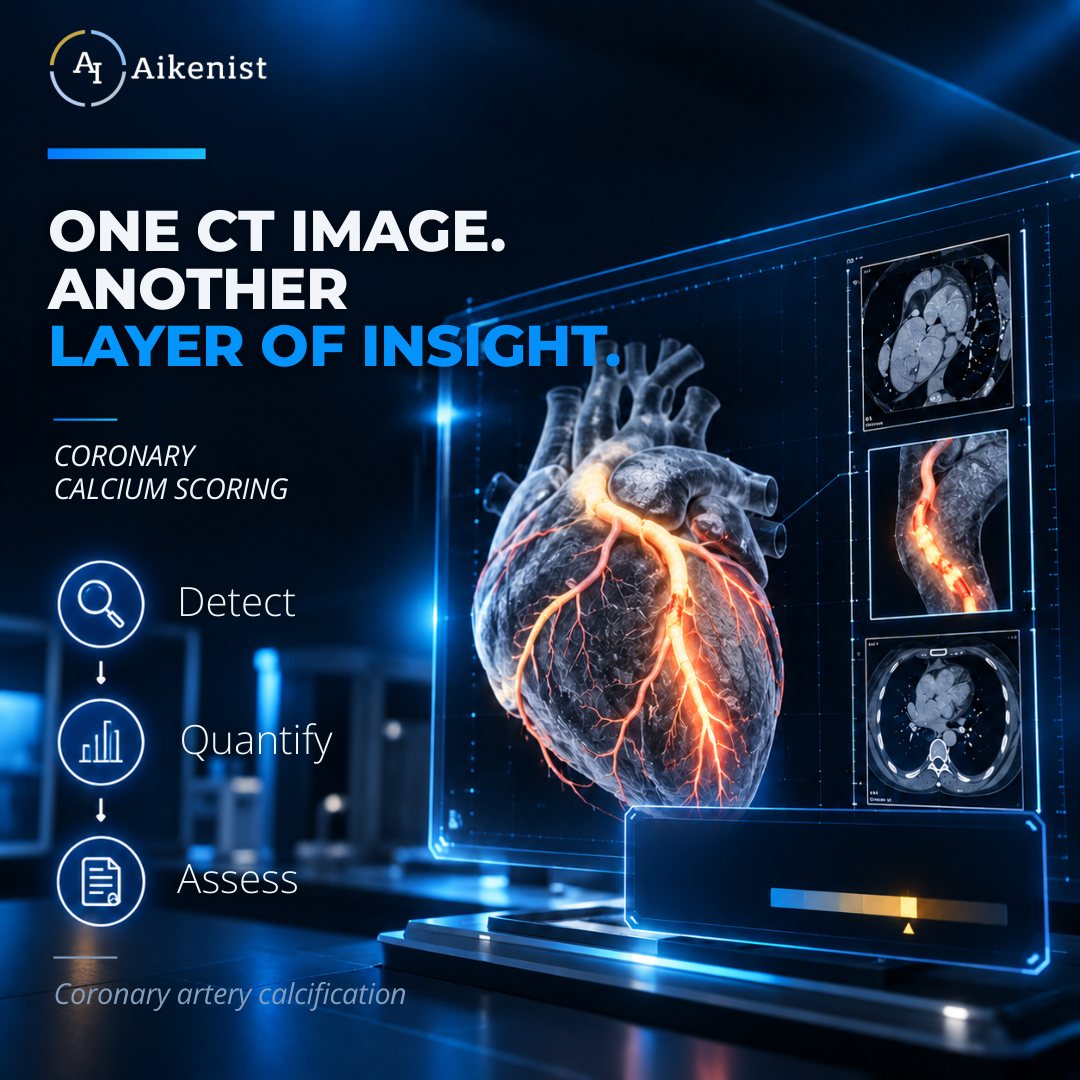
One example is coronary artery calcium scoring, which uses non-contrast cardiac CT to assess and quantify coronary artery calcification.
Looking beyond the scanner
The opportunity becomes interesting when we look past the scanner itself and ask four questions:
- Existing infrastructure: can it support more clinical applications?
- AI-powered analysis: can image interpretation become faster and more consistent?
- Quantification: can we move beyond simply viewing the image?
- Risk context: can imaging findings provide more meaningful clinical insight?
What AI calcium scoring does
Aikenist's AI-powered Calcium Scoring tool is designed to analyse coronary calcification on non-contrast cardiac CT.
The tool:
- Automatically performs Agatston and volume scoring.
- Highlights risk categories and provides additional context through age- and gender-matched comparisons.
- Supports further assessment pathways: it recommends CT angiography for high calcium scores, so plaque can be assessed.
- Performs well in challenging cases such as high heart rates or arrhythmias.
- Allows manual correction, so users can fine-tune or override the automated result when required.
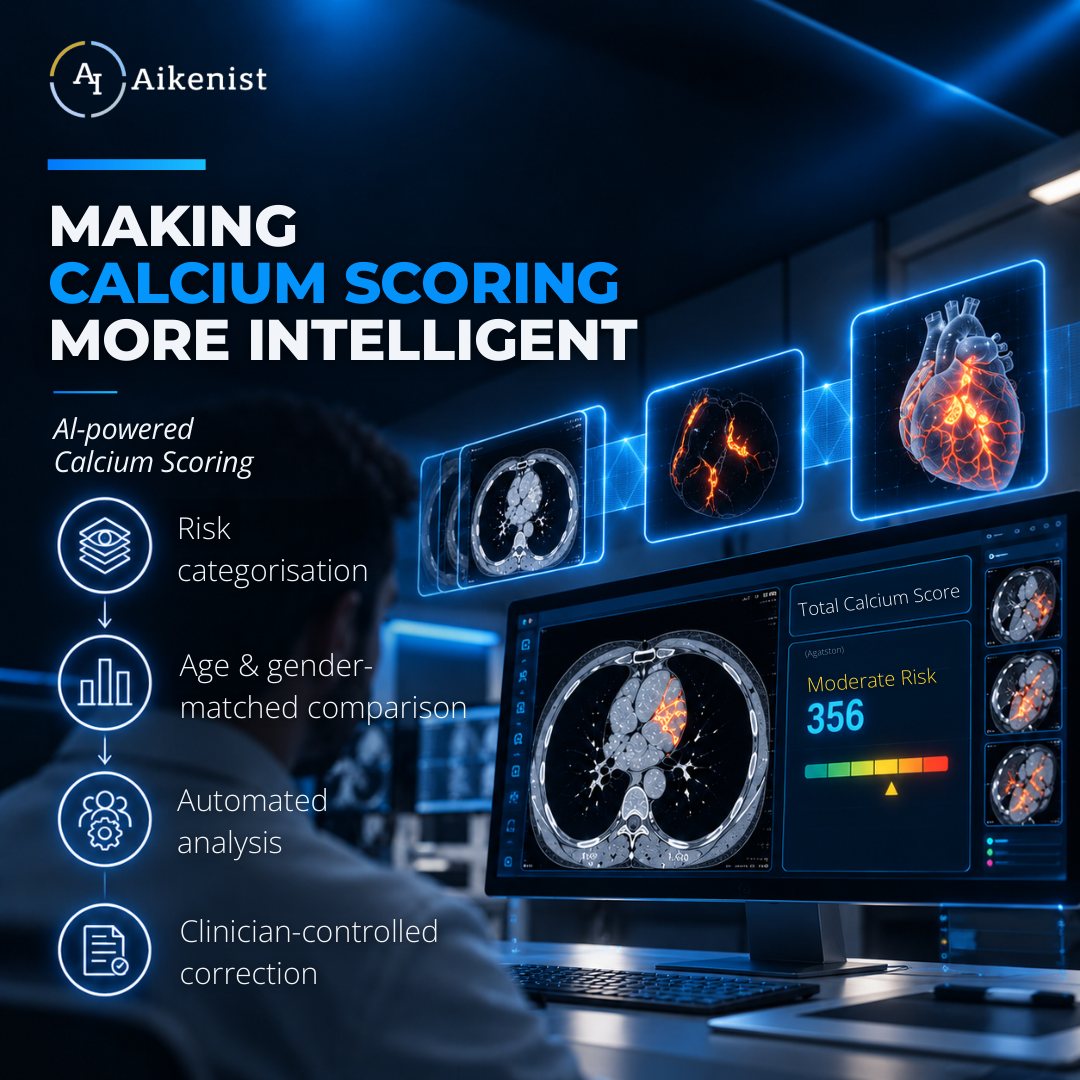
That last point matters. The goal is not to replace the radiologist's judgement, but to give them a consistent, quantified starting point and keep them in control.
How it fits the cardiac CT workflow
Calcium scoring runs automatically in the background, so the result is ready when the radiologist opens the study:
- A non-contrast cardiac CT is acquired at the modality console.
- Aiken Pusher sends the study to the QuickDiag Workstation.
- AI automatically performs Agatston and volume scoring.
- The scoring report opens in the viewer for review and manual correction.

Not a machine-versus-machine conversation
The bigger idea is not about pitting one scanner against another. It is about asking how much more intelligence we can unlock from the imaging infrastructure we already have: faster interpretation, more consistent quantification, and risk categories that give clinicians useful context.

Calcium scoring is one module of Aiken QuickDiag, alongside tools such as Aiken BMD for bone density, and can work on its own or as part of the full platform.
Frequently asked questions
What is coronary artery calcium scoring?
Coronary artery calcium scoring uses non-contrast cardiac CT to assess and quantify coronary artery calcification. Aikenist's Calcium Scoring module automates the scoring and highlights risk categories for the radiologist.
Which scoring methods does AI calcium scoring use?
The QuickDiag Workstation automatically performs Agatston and volume scoring on the cardiac CT study.
How is cardiac risk assessed from the calcium score?
Results are compared with age- and gender-matched populations to give risk context. For high calcium scores, the tool recommends CT angiography for plaque assessment.
Can the automated calcium score be corrected?
Yes. A manual correction option lets users fine-tune or override the automated results for greater accuracy, including in challenging cases such as high heart rates or arrhythmias.
Product capabilities are described as stated in Aikenist's product documentation; availability and regulatory status vary by product and region. QuickSuite is intended for use by, or under the supervision of, licensed healthcare professionals only.